Translate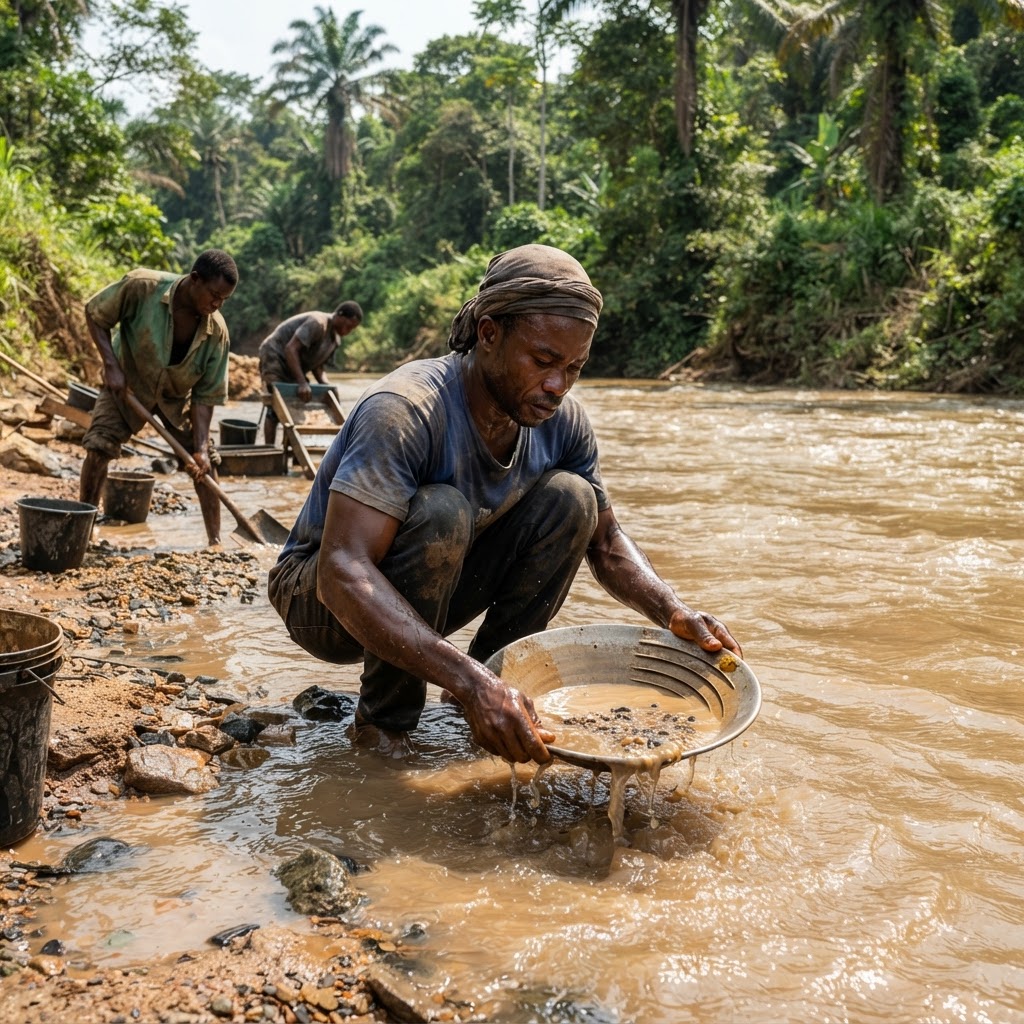
What Is Alluvial Gold?
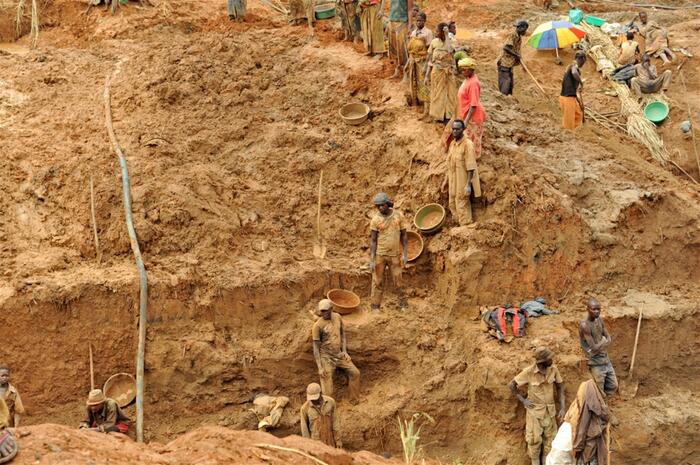
Alluvial gold is natural gold that has been eroded from primary lode deposits by water over geological time and deposited in river channels, flood plains, and ancient stream beds. It is the original form of gold discovery — from the Gold Rush era to modern African mining.
How Alluvial Gold Forms
Gold-bearing quartz veins erode over millions of years. Gold particles — being dense (19.3 g/cm³) — settle in low-energy zones of river systems: bends, pools, and behind boulders. Over time, these concentrations form economically viable placer deposits.
Extraction Methods
Traditional Panning
The simplest method. A miner uses a shallow pan to separate gold from sediment using water and gravity. Used widely by artisanal miners in DRC and Uganda.
Sluicing
A trough with riffles (crossbars) catches gold as sediment-laden water flows through. More efficient than panning; can process several tonnes per day.
Dredging
Mechanical suction equipment extracts sediment from riverbeds. Used in larger alluvial operations in Ituri and Maniema (DRC).
Hydraulic Mining
High-pressure water jets break apart gravel banks. Common in Mubende, Uganda. Requires NEMA environmental clearance.
Typical Grades and Yields
- Uganda (Mubende): 0.2–0.8 g/m³ of processed gravel
- DRC (Maniema): 0.3–1.2 g/m³
- DRC (Ituri): 0.5–2.0 g/m³ (higher-grade zones)
What Buyers Receive
Alluvial gold from DRC and Uganda arrives as:
- Fine gold dust (< 0.1mm particles)
- Flake gold (0.1–2mm flat pieces)
- Small nuggets (2mm–20mm rounded pieces)
- Average purity: 85–92%
Conclusion
Alluvial gold mining remains the backbone of artisanal gold production in Central and East Africa. It delivers consistent volumes at competitive prices — making it the preferred source for bulk raw gold buyers worldwide.
Discuss Your Gold Sourcing Requirements
Interested in discussing legitimate gold sourcing, mining opportunities or African gold supply? Contact Equator Gold Resources to discuss your requirements and the applicable due-diligence process. Availability of gold is always subject to verification, and transactions are subject to applicable regulations.
About the Editorial Team
This article is published by the Equator Gold Resources Editorial Team for general educational purposes and does not constitute legal, tax, investment or professional advice. Gold transactions, mining, licensing, export, taxation, AML/KYC and documentation requirements differ by jurisdiction and change over time. Buyers and investors should confirm current requirements with the relevant government authorities in Uganda, the Democratic Republic of the Congo (DRC), South Sudan and other applicable jurisdictions, and seek advice from qualified legal, customs and assay professionals.